Animal Fun Facts for Kids: Amazing, Weird & True Facts
Animals are full of surprises. Some mammals lay eggs, some sharks can keep parts of their bodies warmer than the surrounding water, hummingbirds beat their wings dozens of times each second, and insects make up an enormous share of animal life on Earth.
This collection of animal fun facts for kids is organized by animal group so curious readers, families and teachers can explore quickly. Every claim below was checked against trusted scientific, museum or government sources.
Explore Animal Facts by Topic
- Shark Facts for Kids
- Octopus Facts for Kids
- Penguin Facts for Kids
- Elephant Facts for Kids
- Dolphin Facts for Kids
- Giraffe Facts for Kids
- Dog Facts for Kids
- Cat Facts for Kids
Mammal Fun Facts
- Mammals get their name from milk-producing mammary glands. Female mammals produce milk to feed their young, although the timing and length of nursing vary greatly by species.
- Mammals make much of their own body heat. This endothermy helps mammals stay active in environments ranging from cold polar regions to hot tropics.
- Some mammals lay eggs. Echidnas and the platypus belong to the small group of egg-laying mammals called monotremes.
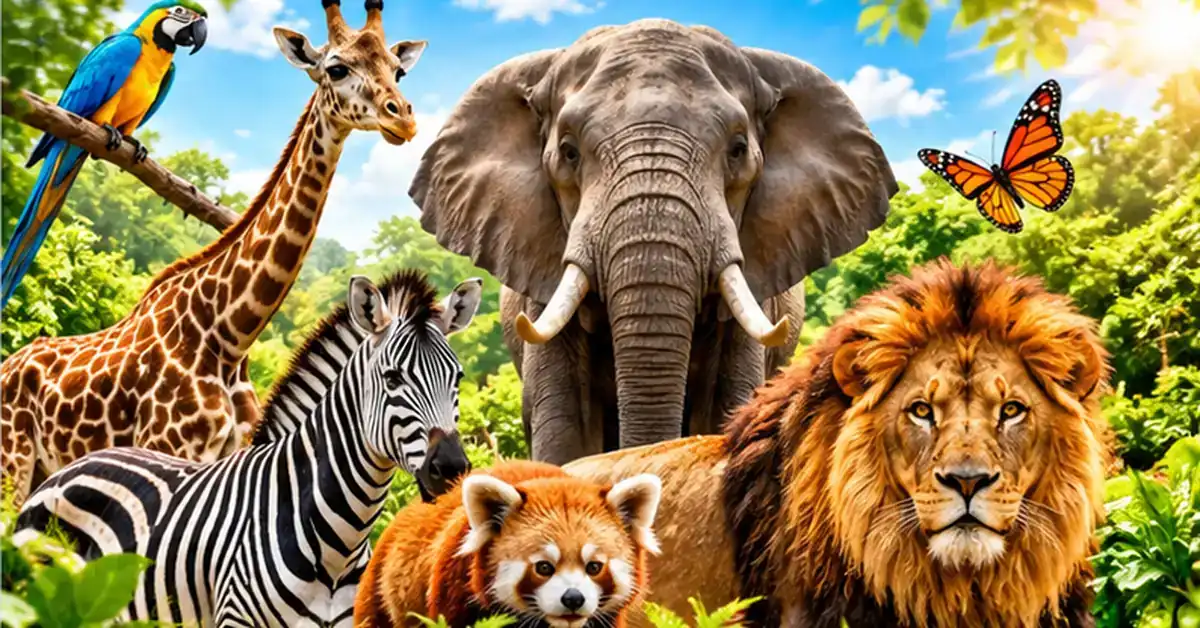
- Lions are unusually social cats. Unlike most wild cats, they live in groups called prides and often hunt cooperatively.
- A lion’s roar can travel for miles. Smithsonian notes that a lion’s territorial roar may be heard up to about five miles away.
- Red pandas are in a family of their own. They are the only living members of the family Ailuridae and are not closely related to giant pandas.
- Red pandas can climb down trees headfirst. Extremely flexible ankles help them move down trunks in a way many tree-climbing mammals cannot.
- Giant pandas have a built-in bamboo grip. A modified wrist bone acts like a “pseudo-thumb” that helps them hold bamboo while feeding.
Checked against: Smithsonian Q?rius mammal biology, Smithsonian Hall of Mammals, Smithsonian lion profile, Smithsonian red panda profile, and Smithsonian giant panda facts.
Ocean Animal Fun Facts
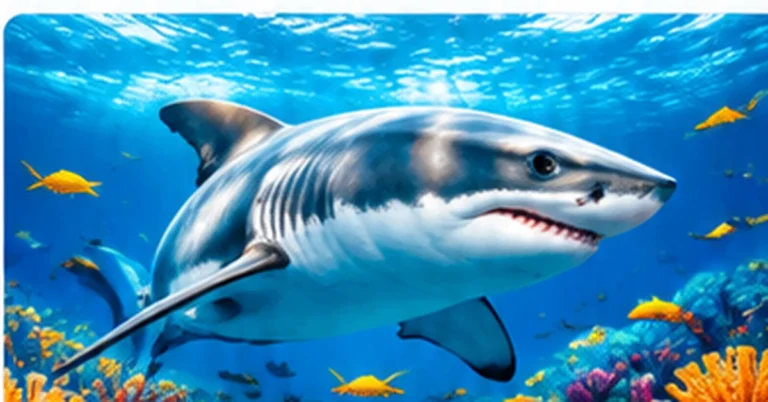
- Great white sharks can live for decades. NOAA lists the white shark’s lifespan at 70 years or more.
- Great white sharks are partly warm-blooded. They are regionally endothermic, which means they can keep parts of their bodies warmer than the surrounding water.
- White shark pups are already large at birth. NOAA reports that they are about four feet long when born.
- Bottlenose dolphins use sound to find food. They can use high-frequency echolocation to locate prey.
- Dolphins do not chew fish like humans chew food. Bottlenose dolphins grip fish with their teeth and typically swallow them whole, head first.
- Baby dolphins can save energy by swimming beside their mothers. Calves often use a close “baby position” that can reduce drag while they swim.
Checked against: NOAA Fisheries white shark profile and NOAA Fisheries bottlenose dolphin profile.
Bird Fun Facts
- Feathers are a defining feature of birds. Smithsonian describes birds as living vertebrates distinguished by feathers, hollow bones and hard-shelled eggs.
- Scientists know more than 11,000 living bird species. Smithsonian’s bird division lists roughly 11,145 known species.
- Ruby-throated hummingbirds beat their wings about 53 times per second. That rapid wingbeat helps produce their famous hovering flight.
- Ruby-throated hummingbirds cannot walk or hop normally. Their legs are so short that they mostly shuffle along a perch.
- Hummingbirds can see colors humans cannot. Their vision extends into the ultraviolet part of the spectrum.
Checked against: Smithsonian National Museum of Natural History and Cornell Lab of Ornithology.
Reptile and Amphibian Fun Facts
- Reptiles and amphibians are ectotherms. They rely heavily on outside heat sources and behavior to warm or cool their bodies.
- Reptile scales help hold in moisture. Their scaly skin is an important adaptation that helps reptiles live in many dry environments.
- Snakes may shed their outer skin in one piece. As a snake grows, its old outer layer can peel away from head to tail.
- Alligators can breathe while most of their body is underwater. Their nostrils face upward on the top of the snout.
- Alligators can reshape their habitat. In the Everglades, they dig “alligator holes” that can hold water and provide refuge for other animals during dry periods.
- American bullfrogs are the largest frogs in the United States. National Park Service material notes that they can grow to about eight inches and weigh more than a pound.
- Amphibians have a dramatic life-cycle change. Many begin as gilled larvae and later become air-breathing adults.
Checked against: National Park Service reptile and amphibian overview, Everglades National Park alligator profile, and National Park Service bullfrog facts.
Insect and Butterfly Fun Facts
- Every insect has three main body sections. They are the head, thorax and abdomen.
- Insects have six legs. That is one easy way to tell them apart from spiders, which have eight.
- Insects have a pair of antennae. Antennae help them detect chemical and other signals in their surroundings.
- The second pair of wings on a fly has become a balancing tool. These tiny modified structures are called halteres and help flies steer in the air.
- There may be around 10 quintillion individual insects alive at one time. Smithsonian educational material uses this estimate to show just how abundant insects are.
- About 900,000 insect species have been described. Scientists think many more remain unnamed.
- Butterfly wings are covered in tiny scales. Butterflies and moths are the insect group best known for this scaled-wing feature.
- A butterfly drinks through a tube-like proboscis. The mouthpart can coil up when it is not being used.
- Butterflies have large compound eyes. Smithsonian Gardens notes that their eyes can provide a very wide field of vision.
- There are roughly 17,500 known butterfly species worldwide. Around 750 occur in the United States.
Checked against: Smithsonian National Museum of Natural History, Smithsonian butterfly information, and Smithsonian Gardens.
Questions Kids Ask About Animals
Are sharks mammals?
No. Sharks are fish. They have cartilage instead of bones, breathe with gills and belong to a very different branch of the animal family tree from mammals such as whales and dolphins.
Do all mammals give birth to live young?
No. Most mammals do, but monotremes such as the platypus and echidnas lay eggs. They are still mammals because they have defining mammal traits, including milk production.
Are spiders insects?
No. Spiders are arachnids. Insects have six legs and three main body sections, while spiders have eight legs and two main body regions.
Animal Myth Check
- Myth: Bats are blind. Reality: Bats can see, and many species also use echolocation.
- Myth: Sharks are mammals. Reality: Sharks are fish.
- Myth: All mammals give birth to live young. Reality: Monotremes lay eggs.
Test What You Learned
- How many legs does an insect have? Six.
- What group includes egg-laying mammals such as the platypus? Monotremes.
- What do dolphins use to help locate prey? Echolocation.
- Are spiders insects? No, they are arachnids.
- What covers butterfly wings? Tiny scales.
How We Check Animal Facts
InsightScribe does not treat viral fact lists as proof. Claims on this page are checked against sources such as the Smithsonian Institution, NOAA Fisheries, the U.S. National Park Service and the Cornell Lab of Ornithology. Changing numbers and conservation claims should be rechecked before future updates.
Continue exploring the full Fun Facts collection and our broad Fun Facts for Kids guide.