How Riddles Help Kids Learn: Benefits of Riddles for Children
Riddles are one of the simplest yet most effective ways to encourage children to think, question, and explore ideas. One of the main benefits of riddles is that they make learning both fun and meaningful. What may seem like a playful puzzle is actually a valuable learning activity that helps children improve reasoning, language skills, and creative thinking. The benefits of riddles also include better problem-solving abilities and stronger mental development, making them a great tool for every child’s growth.
When children try to solve riddles, they analyze clues, make connections and test possible answers. This process strengthens important academic skills while keeping learning enjoyable and stress free.
At InsightScribe, riddles are designed not just for fun but also to help young learners develop confidence, curiosity and problem solving abilities. Whether used in classrooms, family game time or independent practice, riddles turn learning into an engaging challenge.
Why Riddles Are Powerful Learning Tools
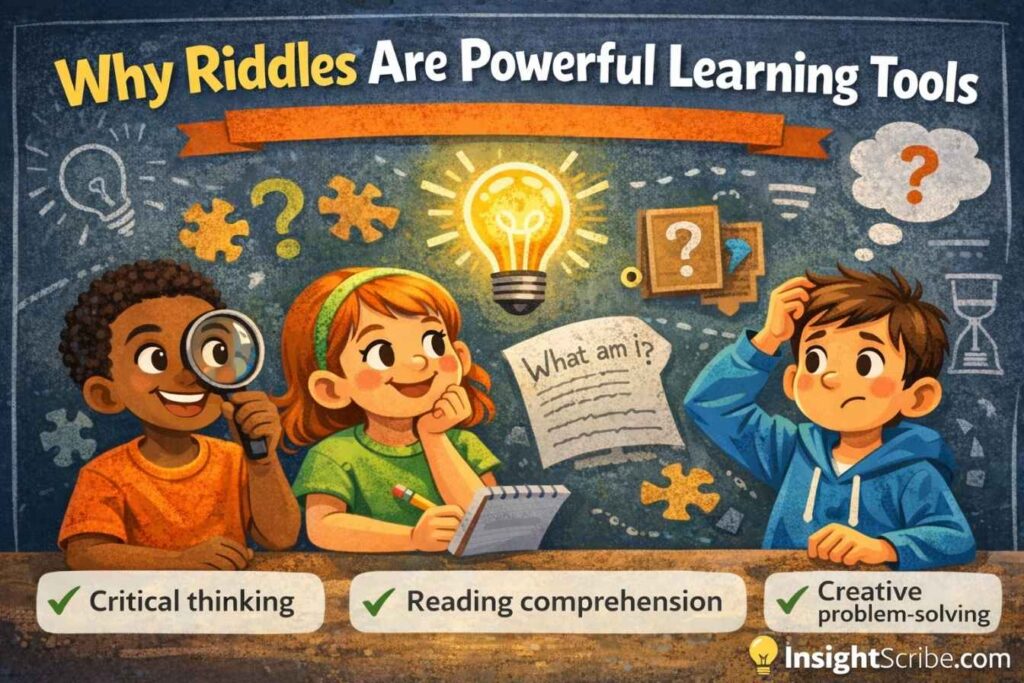
Riddles encourage children to slow down and think carefully. Instead of memorizing information, kids must interpret clues and discover meaning through reasoning.
When kids regularly engage with riddles, they develop :
- Critical thinking skills – analyzing clues and evaluating possible answers
- Reading comprehension – understanding wordplay and hidden meanings
- Creative problem-solving – thinking beyond obvious answers
- Communication skills – explaining their reasoning to others
- Confidence – feeling proud when they solve a challenge
Because riddles feel like games rather than assignments, children stay motivated and curious while learning.
Learning Benefits of Riddles by Age Group
Early Learners (Ages 4–7)
For young children, riddles introduce the idea that clues can lead to answers. Simple riddles help kids develop listening and language skills.
Key benefits include:
- Expanding vocabulary
- Improving listening and comprehension
- Recognizing patterns and simple logic
- Building confidence when sharing answers
Short and playful riddles work especially well for group activities and story time.
Older children who enjoy solving tougher puzzles will love trying our tricky riddles that challenge logic and creative thinking.
Elementary Students (Ages 8–10)
As children grow, riddles become more challenging and educational. At this stage, kids start to analyze clues more deeply.
Learning benefits include:
- Stronger reading comprehension
- Logical reasoning and deduction
- Early math and number problem solving
- Collaboration with classmates and friends
Teachers often use riddles as classroom warm-ups or brain breaks to activate thinking.
Pre-Teens and Middle School (Ages 11–13)
Older kids enjoy riddles that challenge their reasoning and creativity.
At this level, riddles help develop:
- Abstract thinking
- Strategic problem-solving
- Debate and explanation skills
- Confidence when tackling difficult problems
Students often enjoy solving riddles in groups or friendly competitions.
Teenagers and Advanced Learners
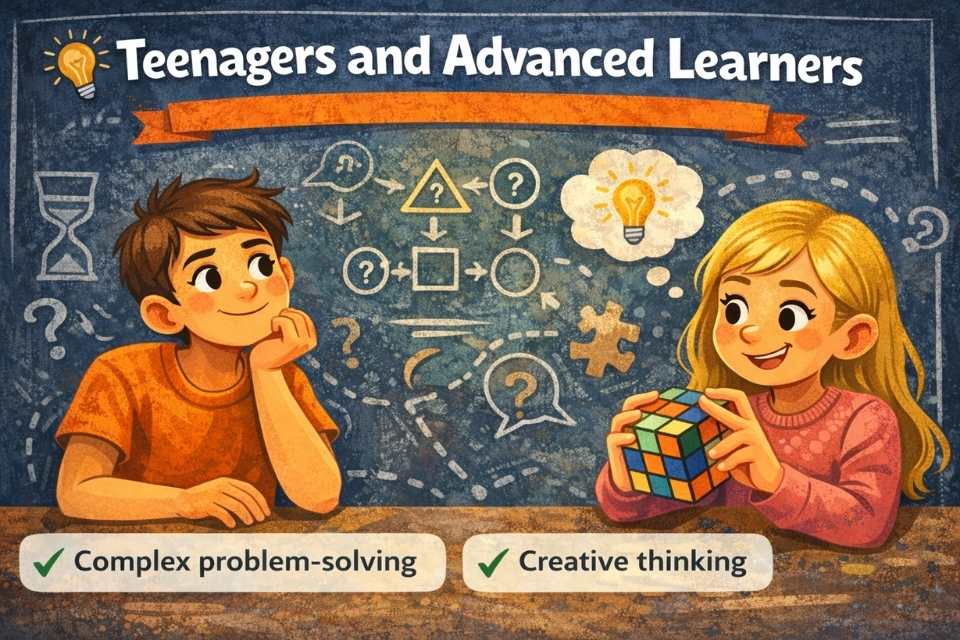
Even older students benefit from riddles. More complex puzzles encourage flexible thinking and mental agility.
Benefits include:
- Advanced reasoning
- Creative thinking
- Analytical problem solving
- Stress relief through playful challenges
Riddles can act as quick mental warm ups before tackling academic work.
Kids can practice their thinking skills by exploring our collection of riddles with answers, which includes fun puzzles for every difficulty level.
Different Types of Riddles and What They Teach
Not all riddles work the same way. Each type encourages different thinking skills.
Word riddles
Help build vocabulary, reading comprehension and language interpretation.
Math riddles
Strengthen arithmetic skills and logical reasoning.
Logic riddles
Encourage structured thinking and problem solving strategies.
Lateral thinking riddles
Push kids to think creatively and explore unusual solutions.
Visual riddles and puzzles
Develop pattern recognition and spatial reasoning.
Combining different riddle types helps support multiple learning styles.
Why Kids Love Solving Riddles
Children naturally enjoy puzzles because they combine curiosity with discovery. Unlike many academic tasks, riddles reward exploration and experimentation.
Kids often:
- Try multiple answers before finding the correct one
- Share riddles with friends and family
- Return to puzzles they couldn’t solve earlier
- Feel proud when they finally discover the answer
This sense of challenge and achievement keeps young learners engaged.
If you’re looking for simple puzzles designed for younger learners, check out our riddles for kids that are perfect for classrooms and family fun.
Practical Ways to Use Riddles for Learning
Riddles can easily become part of everyday learning routines.
At school
- Start lessons with a riddle as a thinking warm-up
- Use riddles during transitions or brain breaks
- Encourage students to explain their reasoning
At home
- Share riddles during family game nights
- Use them during car rides or quiet time
- Create a weekly “riddle challenge” for kids
Independent learning
- Keep a riddle notebook to track puzzles and answers
- Encourage kids to create their own riddles
These activities build thinking skills while keeping learning enjoyable.
Why Riddles Support Lifelong Learning
Riddles teach children that thinking can be fun. Instead of fearing difficult problems, kids learn to approach challenges with curiosity and persistence.
When children enjoy solving problems, they develop a mindset that supports learning in every subject from reading and math to science and creativity.
That’s why riddles remain one of the most engaging tools for encouraging critical thinking and curiosity in young learners.
Final Thoughts
Riddles combine fun with meaningful learning. They encourage kids to analyze clues, explore ideas and develop confidence in their thinking abilities.
From simple puzzles for beginners to tricky brain teasers for older students, riddles offer a playful path to stronger reasoning, creativity, and communication skills.
At Insight Scribe, we believe every riddle is an opportunity to learn, laugh, and think in new ways.
You can even create your own puzzles using our interactive riddle generator tool.
Frequently Asked Questions About Riddles and Learning
What are the educational benefits of riddles for children?
Riddles help children develop important skills such as critical thinking, problem-solving, reading comprehension, and creativity. When kids analyze clues and search for answers, they practice reasoning and learn to think more carefully.
At what age should kids start solving riddles?
Children can start enjoying riddles as early as 4 or 5 years old. Simple riddles with clear clues help young learners build vocabulary and listening skills. As children grow older, they can handle more complex riddles that challenge logic and reasoning.
How do riddles improve critical thinking in kids?
Riddles encourage kids to examine clues, consider multiple possibilities, and eliminate incorrect answers. This process strengthens logical thinking and teaches children how to approach problems step by step.
Can riddles help improve reading skills?
Yes. Many riddles rely on wordplay, hidden meanings, and careful reading. Kids often reread the clues to understand them fully, which improves reading comprehension and vocabulary development.
Are riddles useful for classroom learning?
Teachers frequently use riddles as warm-up activities, brain breaks, or discussion starters. Riddles help students engage with learning in a fun way while strengthening reasoning and communication skills.
Do riddles help kids become better problem solvers?
Absolutely. Riddles require children to think creatively and test different ideas before reaching the correct answer. This process builds confidence and teaches persistence when facing challenges.
What types of riddles are best for kids?
The best riddles for kids depend on age and interest. Younger children enjoy simple word riddles and picture puzzles, while older kids often prefer logic riddles, tricky brain teasers, and math riddles.
How can parents use riddles at home?
Parents can use riddles during family game nights, car rides, or daily learning activities. Sharing riddles regularly helps children practice thinking skills while keeping the experience fun and interactive.