12 Platypus Facts for Kids: Eggs, Bills and an Electric Sense
Quick answer: A platypus is an egg-laying mammal from Australia. It combines fur, a broad bill, webbed feet and a sensitive underwater hunting system. Those features belong to one animal; it is not a cross between a duck and a beaver.
12 surprising platypus facts
1. It is a mammal that lays eggs
Platypuses belong to the monotremes, a small group of egg-laying mammals.
2. Its scientific name is Ornithorhynchus anatinus
That name identifies the living platypus species, rather than every animal with a flat-looking bill.
3. It lives in freshwater
Platypuses inhabit rivers, streams and other freshwater systems. They are not ocean-going animals.
4. Its natural range includes eastern Australia and Tasmania
The species is closely tied to Australian waterways, not wetlands around the whole world.
5. Its bill is sensitive
Receptors help detect electrical signals from prey. The bill is a sensory tool, not simply a duck-like decoration.
6. It searches underwater with eyes and ears closed
Other senses become especially important while it forages below the surface.
7. It eats small water animals
Aquatic invertebrates, including insect larvae, are important foods. It does not browse riverbank grass like a grazing animal.
8. Cheek pouches store a catch
A platypus can gather food underwater and process it after returning to the surface.
9. Its feet help it swim
Webbing supports swimming; the animal can draw back the forefoot webbing for moving on land.
10. Its fur helps it stay insulated
Dense fur is part of its adaptation to spending time in water. A platypus is furry, not covered in duck feathers.
11. A male has venomous ankle spurs
Do not try to handle a wild platypus. Venomous means it can deliver venom; it does not mean every touch or sighting is poisonous.
12. It uses a burrow
Riverbanks provide places for shelter and breeding. Looking after a waterway includes caring for its banks, not only the open water.
Duck-like bill does not mean duck
A useful science habit is to compare several characteristics. The platypus has fur and feeds its young with milk, even though it lays eggs. A bill alone cannot tell you which animal group something belongs to.
Quick quiz: mammal or mix-up?
Is a platypus a bird because it lays eggs?
Show answer and explanation
No. It is a mammal in the monotreme group.
Does its electric sense mean it shocks prey like an electric eel?
Show answer and explanation
No. The fact here is detecting signals, not producing a hunting shock.
Would a wild platypus be a safe animal to pick up?
Show answer and explanation
No. Keep your distance; males can deliver venom through ankle spurs.
Spot the difference in the photograph
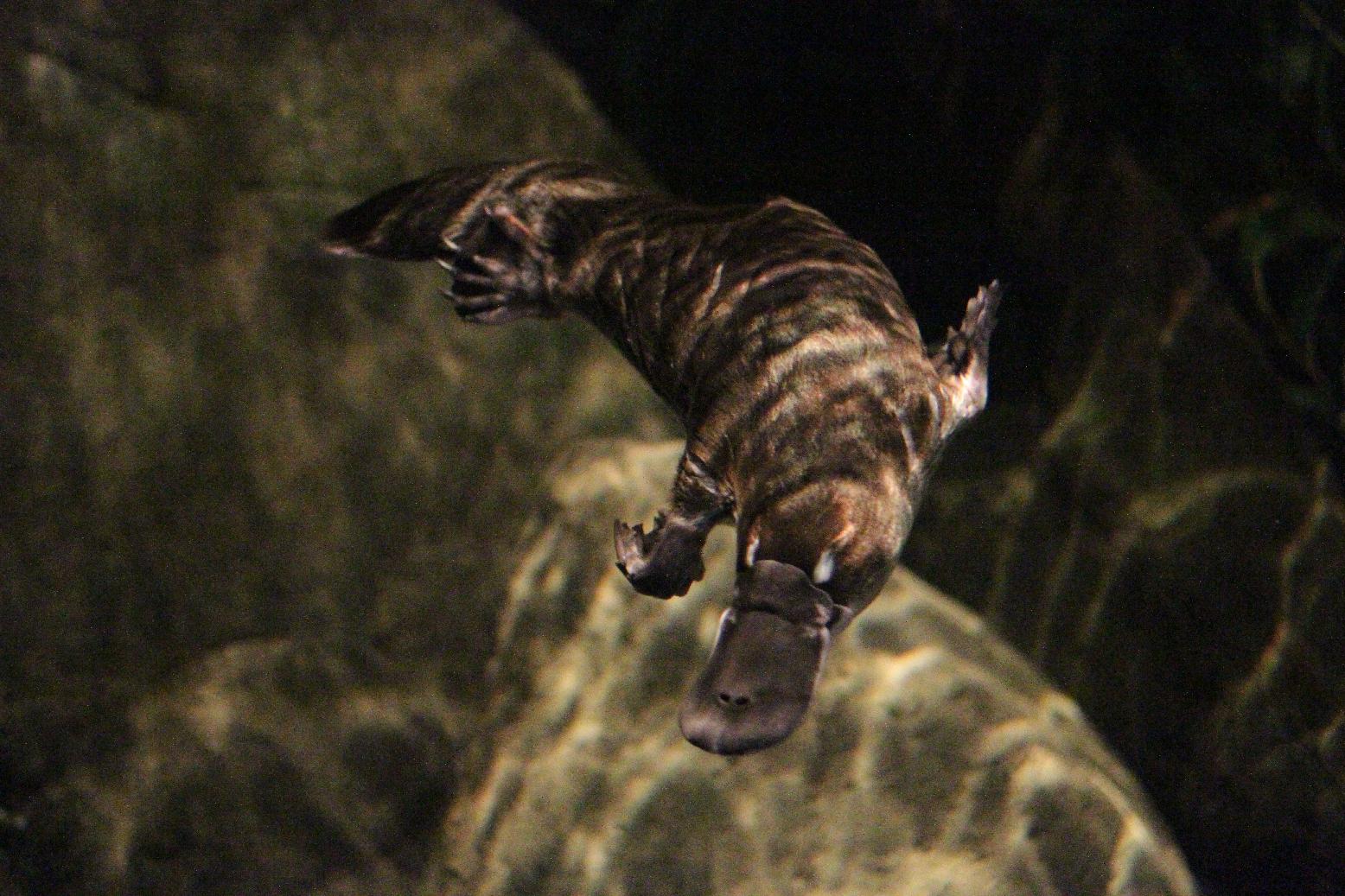
Find the outline of the bill, body, tail and feet. The picture is an aquarium observation, not a guide to approaching animals in a river. For a drawing activity, label which features help with swimming, sensing and staying warm.
Protect the whole waterway
Rubbish and polluted runoff can harm freshwater habitats. Keep litter out of drains and follow local wildlife guidance. If an animal appears injured, contact the appropriate wildlife service rather than trying to catch it.
More animal learning
Try Australia facts for kids for geography or animal trivia for kids for a quiz.
Sources and review notes
Reviewed October 20, 2026. Quiz wording and explanations are written for this page; factual checks use the linked references.