15 Tardigrade Fun Facts for Kids: Tiny Water Bears & Space
Quick answer: A tardigrade is a tiny, eight-legged animal also called a water bear. It usually lives in moist places such as moss, but some tardigrades can survive drying out by entering a resting state. That surprising trick helps explain why NASA studies them in space.
Below are 15 tardigrade fun facts for kids, with simple explanations, careful myth checks and sources you can open. You can also use the three-question mini quiz at the end.
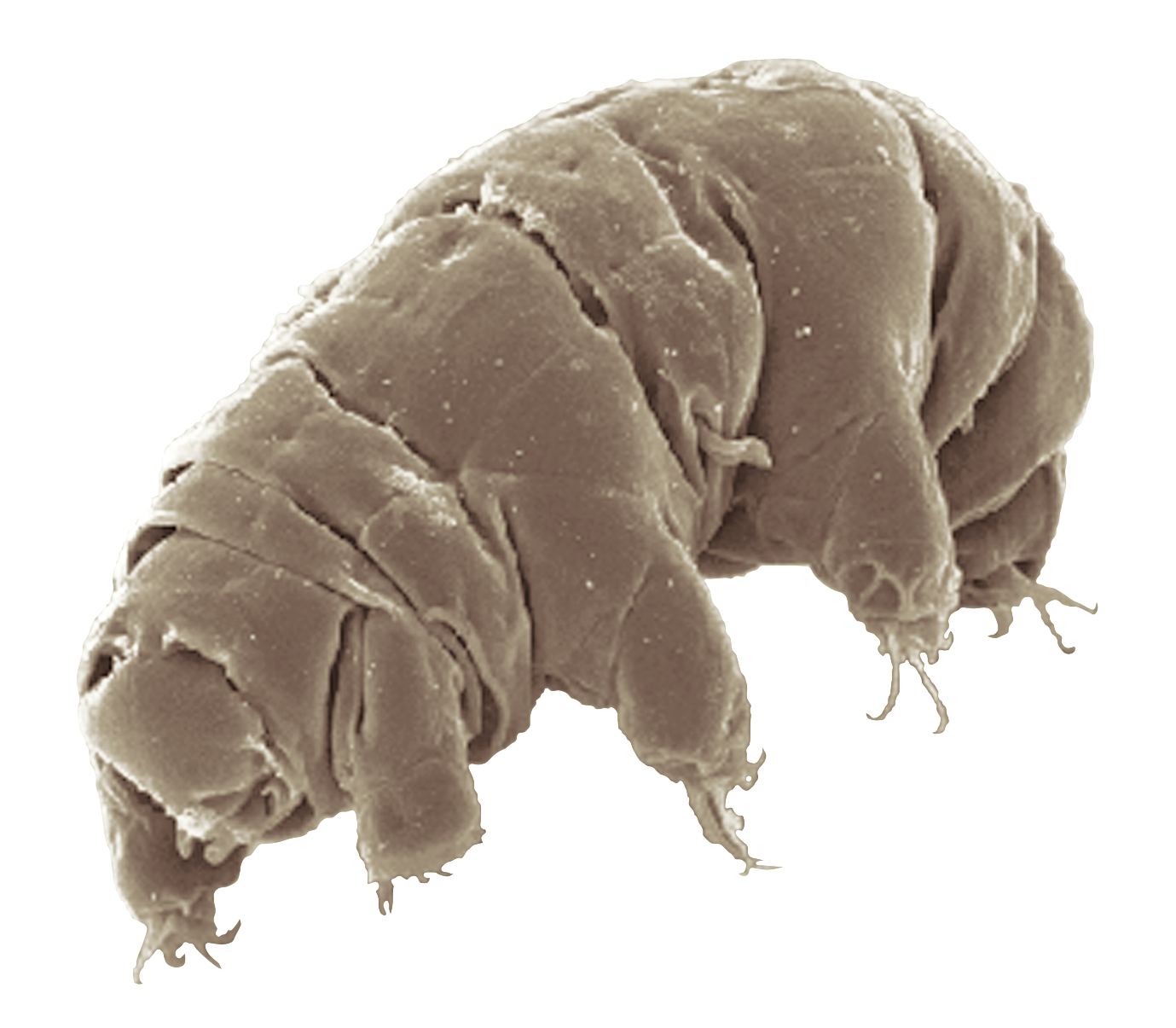
Fast Facts About Tardigrades
| Question | Short answer |
|---|---|
| What are they? | Microscopic animals |
| Other names | Water bears, moss piglets |
| How many legs? | Eight (four pairs) |
| Where do they live? | Many wet or damp places, including moss and freshwater |
| Can they survive space? | Some survived specific experiments; not every tardigrade can survive every space condition |
15 Amazing Tardigrade Facts for Kids
1. A water bear is not actually a bear
The nickname describes a tardigrade’s rounded body and slow, stubby-legged walk. It belongs to a completely different animal group. Scientists call this group Tardigrada. NASA’s water-bear guide shows why the nickname stuck.
2. They are usually too small to see clearly with your eyes
Most tardigrades are much less than a millimeter long. Scientists use microscopes to spot their tiny legs, body shape and movements. Pictures online often enlarge them hundreds of times. Smithsonian’s overview explains their small size.
3. They have eight short legs
A tardigrade walks with four pairs of legs. Some species have little claws at the tips, which can help them grip surfaces. They do not have the long legs of insects or spiders; watch their slow crawl under a microscope and you will see why people compare them to bears.
4. Moist moss can be a tiny animal neighborhood
Tardigrades can live in damp moss, while other species inhabit lakes, seas or other wet habitats. Moss is not their food in every case: it can be the moist place where they move and find food. Never assume every piece of moss contains visible tardigrades.
5. They still need water to be active
Even though some water bears are famous for surviving drought, they normally need a thin film of water to move, feed and grow. Their survival trick is for difficult conditions; it is not proof that a healthy animal can spend its whole active life without water.
6. Some roll into a survival shape called a ‘tun’
When conditions become very dry, certain tardigrades pull their legs inward and shrink into a compact form. Scientists call it a tun. During this unusual resting state, activity becomes extremely low. NASA’s technical overview describes this drought response.
7. Their bodies can slow down dramatically
The word cryptobiosis means that an organism’s usual life processes become almost undetectably slow. It is much more extreme than taking a nap. This ability helps some tardigrades wait out dry conditions until the environment improves.
8. Adding water may wake a dried-out water bear
Some tardigrades in the tun state can become active again when conditions turn suitable, including when water returns. It is not a guarantee: survival depends on the species, how long the stress lasted and other conditions. They are hardy, not magical or immortal.
9. Scientists have tested them in outer space
A 2007 experiment exposed dried tardigrades to low-Earth-orbit space conditions. Some survived vacuum exposure and some survived combined radiation exposures. This is a real scientific experiment—not proof that a tardigrade could live unprotected forever on another planet. Hear NASA scientists explain the study.
10. Space radiation is not harmless to them
Radiation, heat and other stressful conditions can still injure or kill tardigrades. Different species and life stages cope differently. One important science lesson is to ask: Which species? Which dose? For how long? Avoid internet claims that water bears can survive absolutely anything.
11. NASA has grown water bears on the International Space Station
For the Cell Science-04 experiment, scientists studied the species Hypsibius exemplaris in space, including across generations. The goal was to understand which genes help them handle unusual stress. See the NASA experiment summary.
12. Water bears may help us learn about protecting astronauts
Researchers hope studying tardigrade biology will reveal ideas about how living cells respond to the dangers of long space missions. This is research, not an existing “tardigrade shield” for people. Discovering a useful clue does not mean a treatment already exists.
13. Different species eat different things
Tardigrades are a whole group of animals, not one identical species. Depending on the species, some feed on algae or other microscopic material, while others eat tiny animals. Studying their mouthparts and gut contents helps biologists learn about their diets.
14. Scientists can study their young, too
Tardigrades grow and reproduce; they are not just permanently dormant dots. NASA’s work follows some tardigrades over multiple generations, helping researchers compare how adults and their descendants respond to stressful conditions. Read about the generations experiment.
15. A tiny creature can answer a big science question
Why can some living things cope with changes that harm others? Tardigrades are useful because their size, biology and survival strategies make them interesting study subjects. The best fact is not that they are “indestructible”—it is that scientists can test how they survive.
Try a Mini Water-Bear Quiz
- How many legs does a typical tardigrade have?
Show answer
Eight: four pairs.
- What is a tun?
Show answer
A compact resting form some tardigrades enter during severe drying.
- Can every tardigrade survive every space condition?
Show answer
No. Some survived specific experiments, and the results depend on the conditions.
Can You Find a Tardigrade?
If you have a classroom microscope and permission to collect a small amount of moss, you can ask an adult or teacher about observing a soaked sample. Finding one is not guaranteed, and you should return or dispose of materials according to classroom rules. Do not place moss or pond water in your mouth.
More Science and Animal Fun Facts
Keep exploring with our animal fun facts, science facts for kids, octopus facts and animal trivia questions.
Sources and Fact-Checking Notes
Reviewed October 20, 2026. For basic anatomy, survival and space research, see NASA’s tardigrade overview, NASA Cell Science-04, NASA’s species fact sheet and Smithsonian’s habitat overview. Survival results are not universal across all species or conditions. The microscope image has its own image credit and license above.